Know what's Best for You at Tooth Alley™ - Best Dental & Orthodontic Clinic and Invisalign Centre in Faridabad
A Comprehensive Guide to Modern Dental Services
Your smile is a window to your health and confidence, and modern dentistry offers a vast array of services to keep it healthy and beautiful for a lifetime. Far beyond simple check-ups, today's dental practices provide specialized care for every need, from prevention to full mouth restoration. Understanding the available options is the first step toward achieving optimal oral health.
1. Preventive and Advanced Diagnostic Services
Preventive care is the cornerstone of lifelong oral health, aiming to stop problems before they start. Diagnostic services allow for early detection, which is key to simpler and less expensive treatment.
Best Treatment Options:
Routine Exams and Cleanings (Prophylaxis): A professional cleaning removes hardened plaque (calculus/tartar) and surface stains that regular brushing can miss. The best option is a regular professional cleaning every six months, often paired with a comprehensive oral exam and digital X-rays to check for hidden issues like early decay or bone loss.
Dental Sealants: A protective plastic coating painted onto the chewing surfaces of back teeth (molars and premolars) to shield them from decay. This is especially recommended for children and teens, but adults with deep grooves in their teeth can also benefit from this quick, painless, and highly effective preventative measure.
Fluoride Treatments: Professional-strength fluoride application helps re-mineralize tooth enamel, making teeth more resistant to acid attacks and decay. This is a crucial defense against cavities for high-risk patients.
2. General and Restorative Dentistry
Restorative dentistry focuses on repairing teeth damaged by decay, trauma, or wear, restoring their function and aesthetics.
Best Treatment Options:
Dental Fillings: Used to treat cavities by removing decayed material and filling the space. The best available option is often a composite (tooth-colored) resin filling, which bonds to the tooth structure and blends seamlessly with your natural tooth, offering both strength and a beautiful appearance.
Root Canal Therapy (Endodontics): This treatment is necessary when the tooth's pulp (nerve and blood vessels) becomes infected or inflamed, often due to deep decay or trauma. The dentist removes the infected pulp, cleans and shapes the inside of the root canal, and then fills and seals the space. The tooth is typically protected afterwards with a dental crown to prevent fracture. Root canal therapy is the best way to save a natural tooth that would otherwise require extraction.
Dental Crowns: A custom-made 'cap' placed over a tooth to restore its shape, size, strength, and appearance. They are often needed after a root canal, for a large filling, or for a fractured tooth. Modern options include all-porcelain or Zirconia crowns, which offer incredible durability and a highly natural look that is virtually indistinguishable from a real tooth.
Dental Bridges: Used to replace one or more missing teeth by joining an artificial tooth to adjacent natural teeth or dental implants. A bridge is a fixed (non-removable) replacement option.
3. Cosmetic Dentistry
Cosmetic dentistry is focused on improving the appearance of your teeth, gums, and bite, transforming your smile's aesthetics.
Best Treatment Options:
Teeth Whitening: A popular treatment to remove stains and discoloration. The most effective option is professional in-office power whitening or dentist-supervised custom take-home tray systems, which use professional-strength bleaching agents to achieve significantly brighter results safely and quickly.
Dental Veneers: Thin, custom-made shells of porcelain or composite resin bonded to the front surface of teeth to correct issues like discoloration, chips, gaps, or minor misalignment. Porcelain veneers are considered the gold standard for dramatic, long-lasting, and highly aesthetic transformations.
Dental Bonding: Uses a tooth-colored resin material to repair minor chips, cracks, or gaps. It is a faster, more affordable alternative to veneers, often completed in a single visit, making it the best choice for small cosmetic corrections.
4. Orthodontics
Orthodontic treatment focuses on correcting bites, closing gaps, and straightening crooked teeth to improve function and aesthetics.
Best Treatment Options:
Clear Aligners (e.g., Invisalign): These are the most popular alternative to traditional metal braces for adults and teens. The clear, removable aligners offer a discreet and comfortable way to gradually shift teeth into the correct position.
Traditional Braces: Highly effective for complex cases, using metal or ceramic brackets and wires to achieve optimal alignment. Ceramic braces are a less noticeable option for patients needing traditional mechanics.
5. Periodontics (Gum Care)
Periodontics is the specialized care of the gums and the bone supporting the teeth, critical for preventing and treating gum disease.
Best Treatment Options:
Scaling and Root Planing (Deep Cleaning): The primary treatment for early to moderate gum disease (periodontitis). This procedure involves meticulously removing plaque and tartar from below the gum line and smoothing the tooth roots to help gums reattach.
Laser Therapy: Modern periodontics often incorporates lasers to remove diseased gum tissue and sterilize the pockets around the teeth, promoting faster healing and minimizing discomfort.
Gum Grafts: Used to treat gum recession, where the gum tissue pulls away from the tooth, exposing the root. A gum graft restores the lost tissue, protecting the tooth root from decay and sensitivity.
6. Oral Surgery and Implants
Oral surgery addresses complex extractions, tissue repair, and the replacement of missing teeth.
Best Treatment Options:
Tooth Extractions: Performed when a tooth is severely damaged, decayed, or impacted (like wisdom teeth).
Dental Implants: The most advanced and durable solution for missing teeth. A titanium implant is surgically placed into the jawbone, acting as an artificial tooth root, which is then topped with a crown. Implants prevent bone loss and provide a stable, long-term replacement that looks, feels, and functions like a natural tooth.
Bone Grafting: Often required before implant placement when significant bone loss has occurred. This procedure adds bone material to the jaw to create a solid foundation for the implant.
No matter your current oral health status, a solution exists to achieve a healthy, functional, and beautiful smile. Your dentist at Tooth Alley is your partner; a comprehensive examination is the first step to creating a personalized treatment plan that uses the best of modern dental technology.
Invisalign vs Braces: Which Orthodontic Treatment is Right for You?
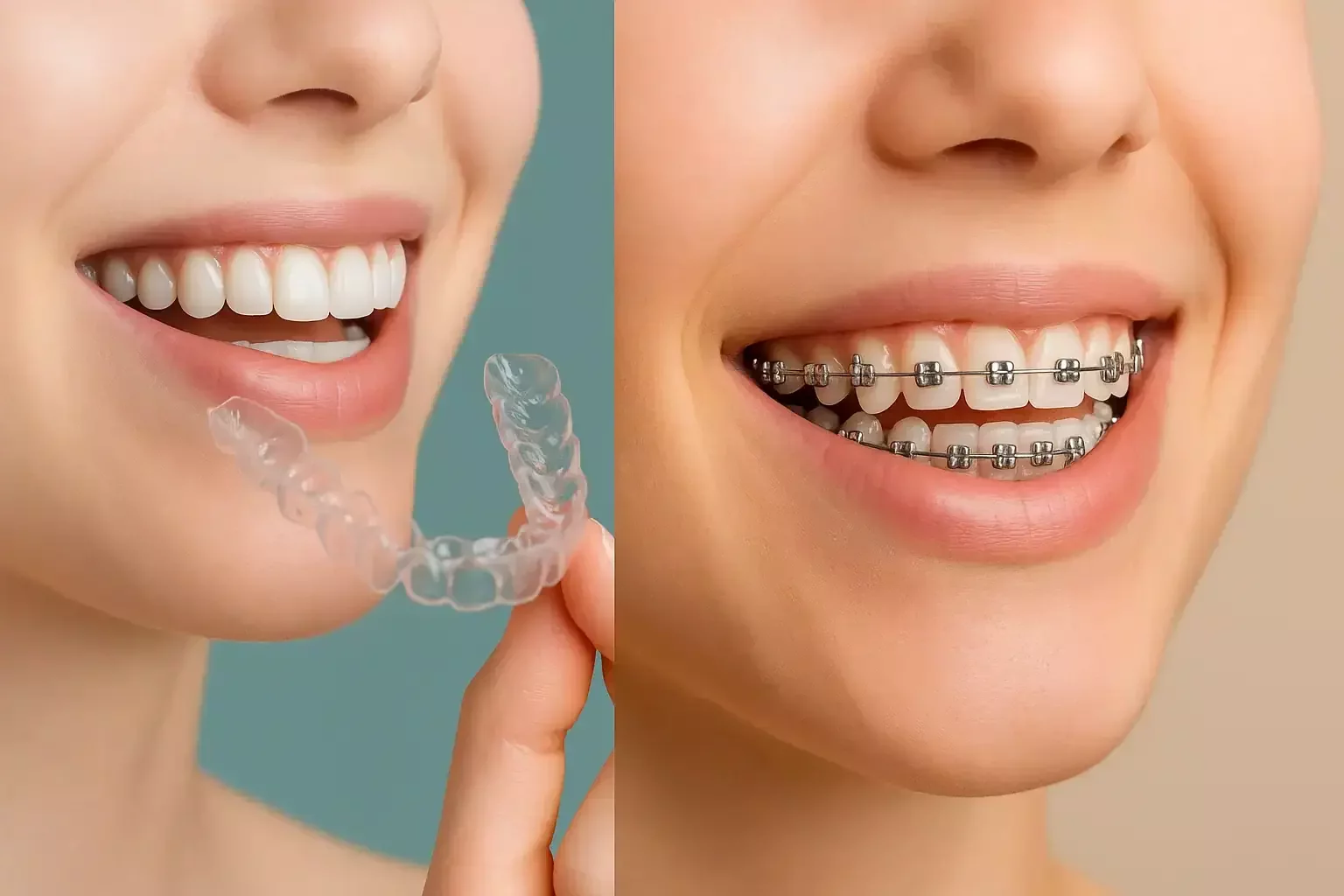
Tooth Alley (Best Orthodontic & Aligner treatment Clinic), helps you decide best when it comes to achieving a straighter smile, two of the most popular orthodontic options are Invisalign and traditional braces. While both are effective, they differ in terms of appearance, cost, comfort, and treatment duration. In this comprehensive guide, we’ll explore the key differences between Invisalign vs Braces, helping you decide which treatment best suits your needs.
What Are Braces and Invisalign?
Braces: The Traditional Method
Braces consist of metal brackets attached to the teeth and connected by wires and elastics. They apply continuous pressure to move teeth into the desired position.
Invisalign: The Clear Alternative
Certified Invisalign Provider uses a series of custom-made, clear plastic aligners that are worn over the teeth. These aligners are removable and replaced every few weeks to gradually shift teeth.
Appearance: Invisible vs Visible
- Invisalign aligners are nearly invisible, making them a preferred choice for adults and teens concerned about aesthetics.
- Braces, especially metal ones, are highly noticeable, although ceramic and lingual braces offer more discreet options.
Comfort and Convenience
- Invisalign aligners are smooth and custom-fit, causing less irritation to gums and cheeks.
- Braces can cause discomfort due to brackets and wires, especially after adjustments.
- Invisalign can be removed while eating, brushing, and flossing; braces are fixed and can make oral hygiene more challenging.
Effectiveness and Complexity
- Braces are highly effective for complex dental issues such as severe crowding, rotated teeth, and significant bite problems.
- Invisalign works well for mild to moderate cases but may not be suitable for every orthodontic situation.
Invisalign vs Braces Cost
| Treatment | Average Cost (INR) |
|---|---|
| Invisalign | 1.5L - 3L |
| Braces | 25000 - 85000 |
- While braces vs Invisalign cost can vary, traditional braces are generally more affordable.
- Invisalign cost vs braces often reflects convenience, aesthetics, and newer technology.
Duration of Treatment
| Treatment | Average Duration |
| Invisalign | 12-18 months |
| Braces | 18-24 months |
- Invisalign treatment may be faster for simple cases, but braces can be more effective for complex realignments.
- Compliance is key: Invisalign requires wearing aligners 20-22 hours per day.
Maintenance and Follow-up
- Braces require frequent dental visits for tightening and adjustments.
- Invisalign check-ins are typically every 6-8 weeks, and new aligners are sent in batches.
- Both require retainers post-treatment to maintain results.
Lifestyle Considerations
- Invisalign is ideal for people with busy lifestyles or public-facing jobs.
- Braces are a solid option for children and teens less likely to consistently wear removable aligners.
Social and Psychological Impact
- Many patients find Invisalign to boost their confidence, especially during public speaking or social events.
- Some people feel more secure with braces, as the fixed appliance indicates active treatment and can help reinforce commitment.
Long-term Oral Health Benefits
- Both Invisalign and braces contribute to better alignment, reducing the risk of cavities, gum disease, and jaw issues.
- Correcting malocclusion with either method can also improve speech and bite efficiency.
Insurance and Payment Options
- Our clinic offers flexible payment options such as monthly installment or third party plans to reduce upfront costs.
Environmental Considerations
- Invisalign aligners are replaced frequently, which can raise concerns for environmentally conscious patients.
- Traditional braces, while fixed, generate less overall plastic waste but may require additional hygiene tools and packaging.
Technological Innovations
- Invisalign utilizes SmartTrack material, which provides gentle, constant force for more predictable tooth movement.
- Modern braces now include self-ligating systems, reducing friction and the need for frequent adjustments.
Pros and Cons Summary
Invisalign Pros:
- Nearly invisible
- Removable for meals and hygiene
- Less irritation
Invisalign Cons:
- Must be worn consistently
- May not be suitable for complex cases like surgical case
- Higher cost
Braces Pros:
- Effective for all case types
- No discipline required to wear
- Often lower cost
Braces Cons:
- Noticeable appearance
- More discomfort
- Difficulties with oral hygiene
Common Questions
How long does Invisalign take vs braces?
- Invisalign: ~12-18 months
- Braces: ~18-24 months, depending on complexity
How much is Invisalign vs braces?
- Invisalign is typically more expensive.
Are results permanent?
- Yes, with consistent retainer use post-treatment.
Can I switch from braces to Invisalign?
- In some cases, yes—consult with Tooth Alley - Best Orthodontic and Certified Invisalign Provider Specialized Dental Practice Clinic in Faridabad.
Conclusion: Which Should You Choose?
Choosing between Invisalign vs braces depends on your dental condition, lifestyle, and budget. If discretion and convenience matter most, Invisalign may be ideal. If your case is complex and you prefer a tried-and-true method, traditional braces might be better.
Consult Dr. Sachin Parashar - Best Qualified orthodontist in Faridabad and Best Certified Invisalign Provider in Faridabad at Tooth Alley, to evaluate your specific needs and determine the best treatment plan.
Note - Regardless of your choice, both options lead to a confident, healthier smile.